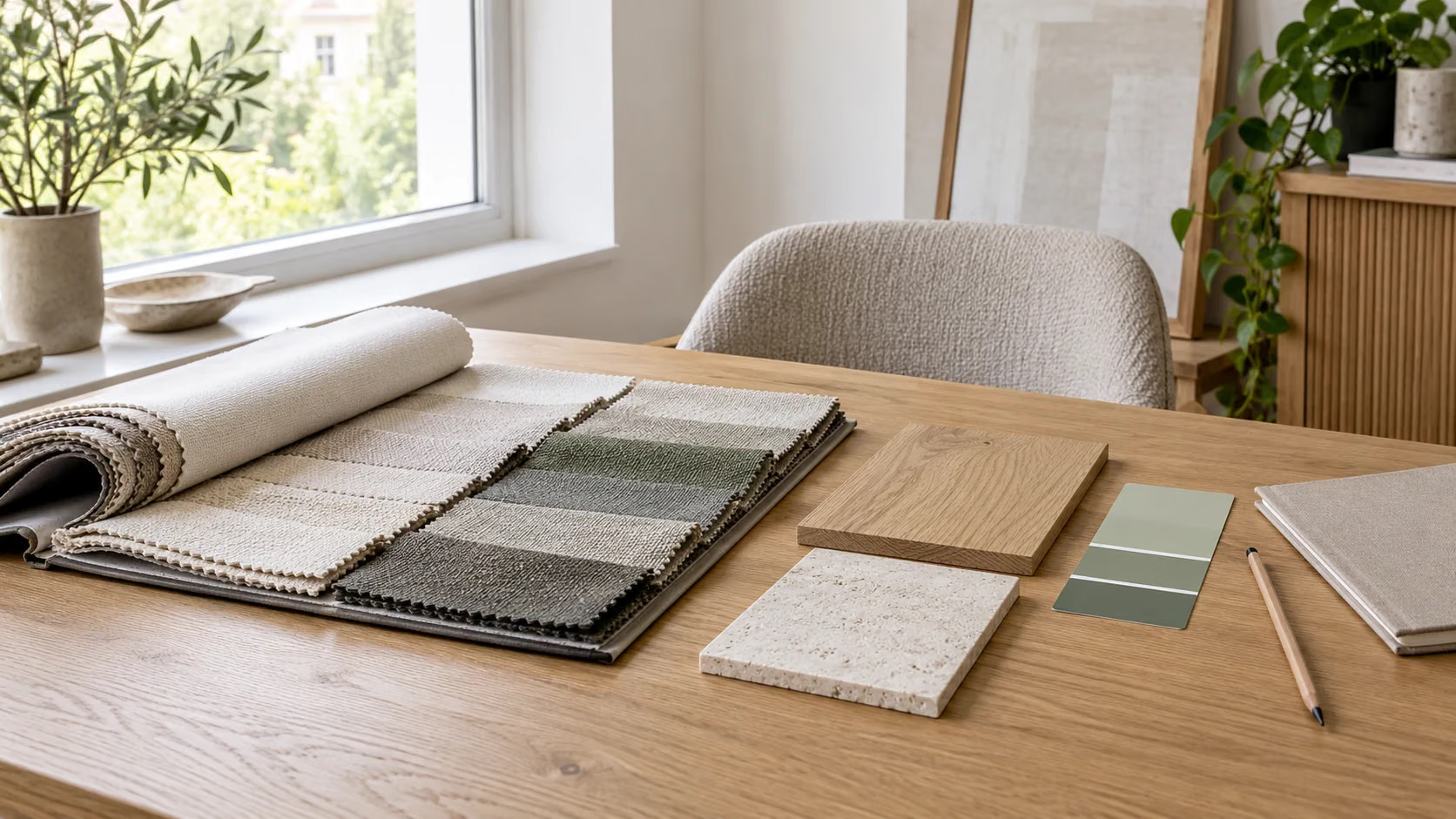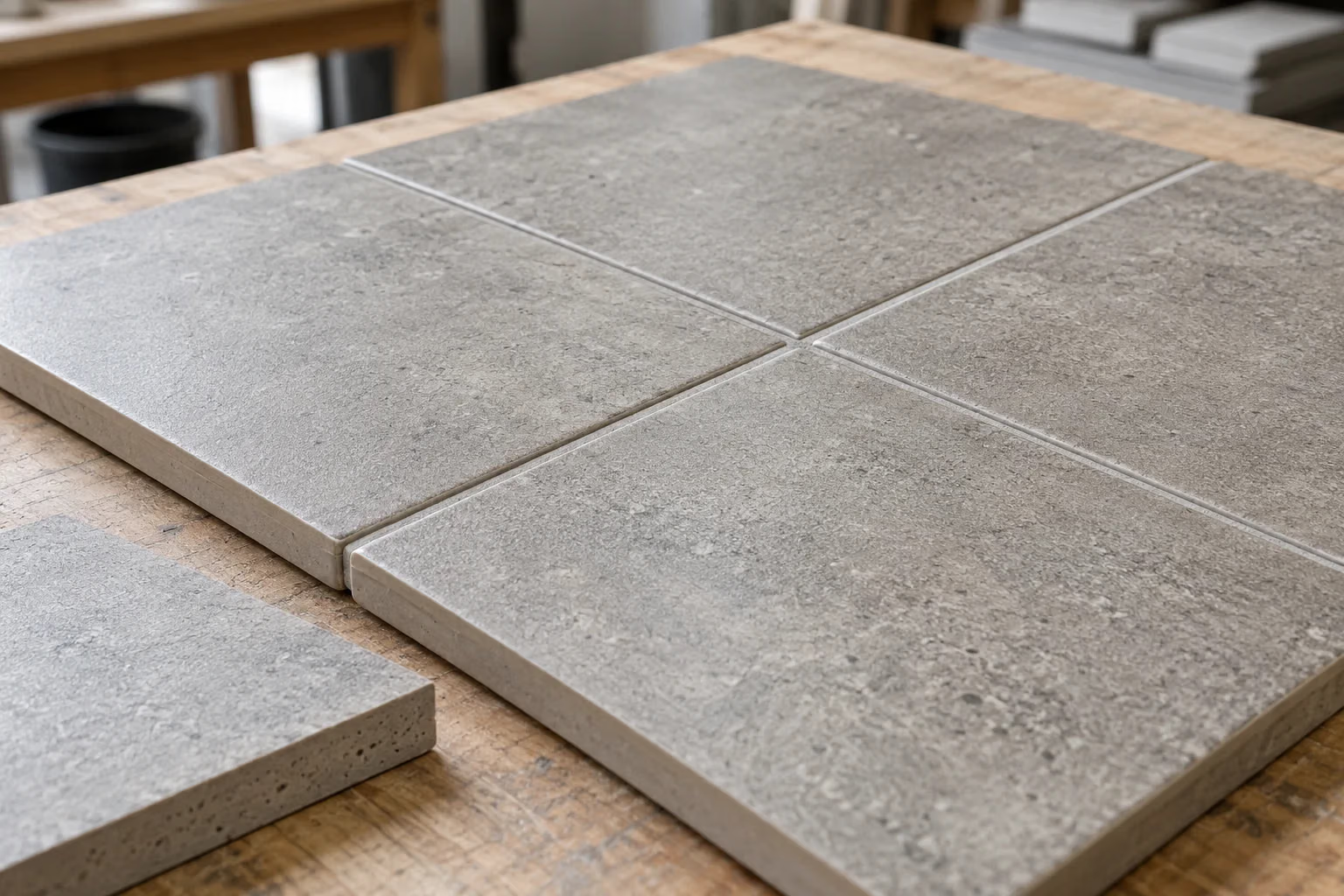

Short answer: the easiest way to find your interior style isn’t to pick a name from a list, but to collect photos you like and name what they have in common: colours, materials, the amount of decor and the mood. Only then is it worth checking what that’s called — and whether it suits the way you live.
Step 1. Collect 20–30 photos without overthinking
Create a Pinterest board or a folder on your phone and for a week save interiors you like. Don’t analyse them yet — just save. It matters that they’re whole interiors, not single lamps or armchairs: style is the relationship between the elements.
Step 2. Find the common thread
Lay the photos side by side and answer these questions:
- Colours: light and warm, cool and grey, or high-contrast with black?
- Materials: light wood, dark walnut, stone, metal, fabrics?
- Amount of stuff: clear surfaces and hidden storage, or shelves full of books and keepsakes?
- Lines: straight and geometric, or rounded and soft?
- Mood: calm, cosy, elegant, raw?
The answers that repeat across most of the photos are your style — whatever it’s called.
Step 3. Name the style (and check it really is the one)
A few styles that come up most often in Polish apartments:
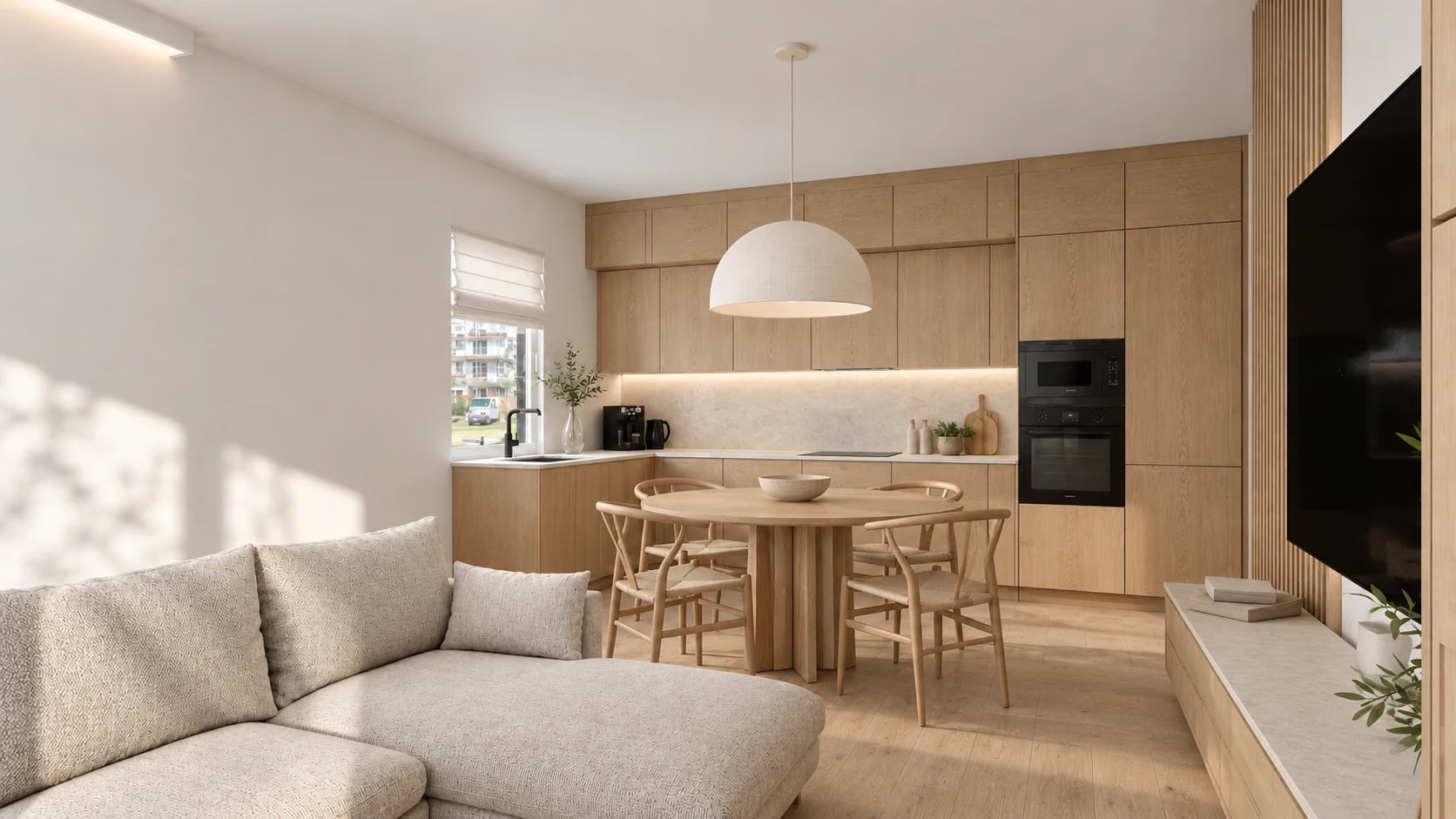
- Japandi — Scandinavian functionality meets Japanese minimalism: light wood, linen, earthy colours, few objects.
- Scandinavian — light walls, wood, plenty of light, cosy textiles.
- Modern classic — mouldings, symmetry, fine materials in a contemporary way.
- Soft loft — brick, graphite, metal and wood, but warmer and calmer than a classic loft.
- Minimalism — few objects, hidden storage, clean surfaces.
- Eclectic — a deliberate mix of eras and patterns that needs a good sense of proportion.
If your photos fit two styles at once, that’s normal. Most successful interiors combine the base of one style with accents of another.
Step 4. Test the style against everyday life
A beautiful Pinterest interior still has to work for you:
- Children and pets? White sofas and light rugs need discipline, and high-gloss fronts show every fingerprint.
- How much stuff do you have? Minimalism only works with plenty of hidden storage.
- How much light is there? Dark colours in a north-facing apartment can feel heavy; in a bright living room they feel cosy.
- How long are you staying? In a home for years, invest in a timeless base and leave trends to accessories.
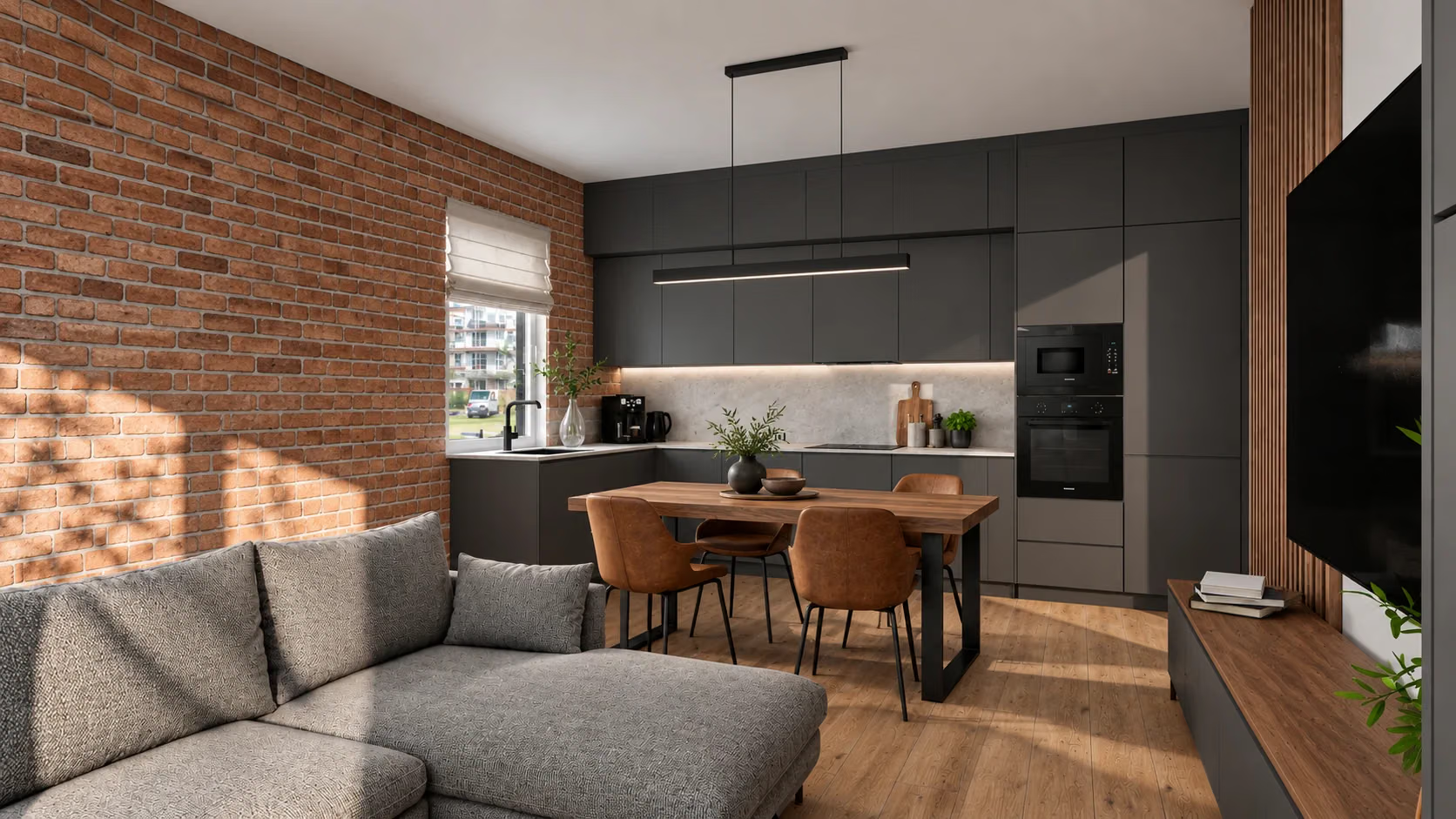
Illustrative visualization.
Step 5. See the style in your apartment before you buy furniture
A moodboard is a good start, but it doesn’t show how colours and materials will work in your light and your proportions. That’s why, after the moodboard, I prepare 3D visualizations: you see your living room with the chosen floor, cabinets and sofa before ordering anything. Changing a colour at that stage takes a few minutes, not a furniture return.
Base colours — where to start the palette
Once the style has a name, it’s time for colours. The simplest way is to think of the palette in three layers:
- Base (around 60–70% of the interior): walls, floor, large built-ins. These are the colours you’ll live with longest, so keep them calm: warm white, sandy beige, light grey, natural wood.
- Supporting (around 20–30%): sofa, curtains, rug, kitchen fronts. A deeper colour can come in here — olive, graphite, terracotta.
- Accent (around 10%): cushions, art, lamps, ceramics. This is the place for trendy colours and bold patterns that are easy to swap.
Before choosing a wall colour, test a sample on a large sheet in several spots of the apartment and at different times of day. The same beige will look warm in a south-facing room and may look grey in a north-facing one. It also helps if the colours of neighbouring rooms, seen through open doors, work together.
The most common style mistakes
- Buying furniture one piece at a time, with no plan. Each is nice on its own, but together they don’t add up.
- Trends in long-term elements. A fashionable tile or cabinet colour is hard to change a few years later.
- Copying a photo one to one. A Pinterest interior has different windows, size and light from yours.
- Ignoring what stays. A floor or doors you aren’t replacing are part of the style too.
Summary
An interior style isn’t a label, it’s a set of decisions about colours, materials and the amount of stuff. Collect photos, find the common thread, test it against everyday life — and see it in your apartment before you buy furniture.
Want help naming your style? Book a free 30-minute call and bring your Pinterest photos — I’ll tell you what connects them and how to bring it into your space.