
Short answer: you can save the most on surfaces that are mainly about looks — floors, worktops, cabinet fronts and decor — by choosing good alternatives to more expensive materials. What’s not worth saving on is what’s hidden in the walls and what you touch every day: wiring and plumbing, waterproofing, hardware and lighting.
Where alternatives work best
1. Porcelain instead of natural stone
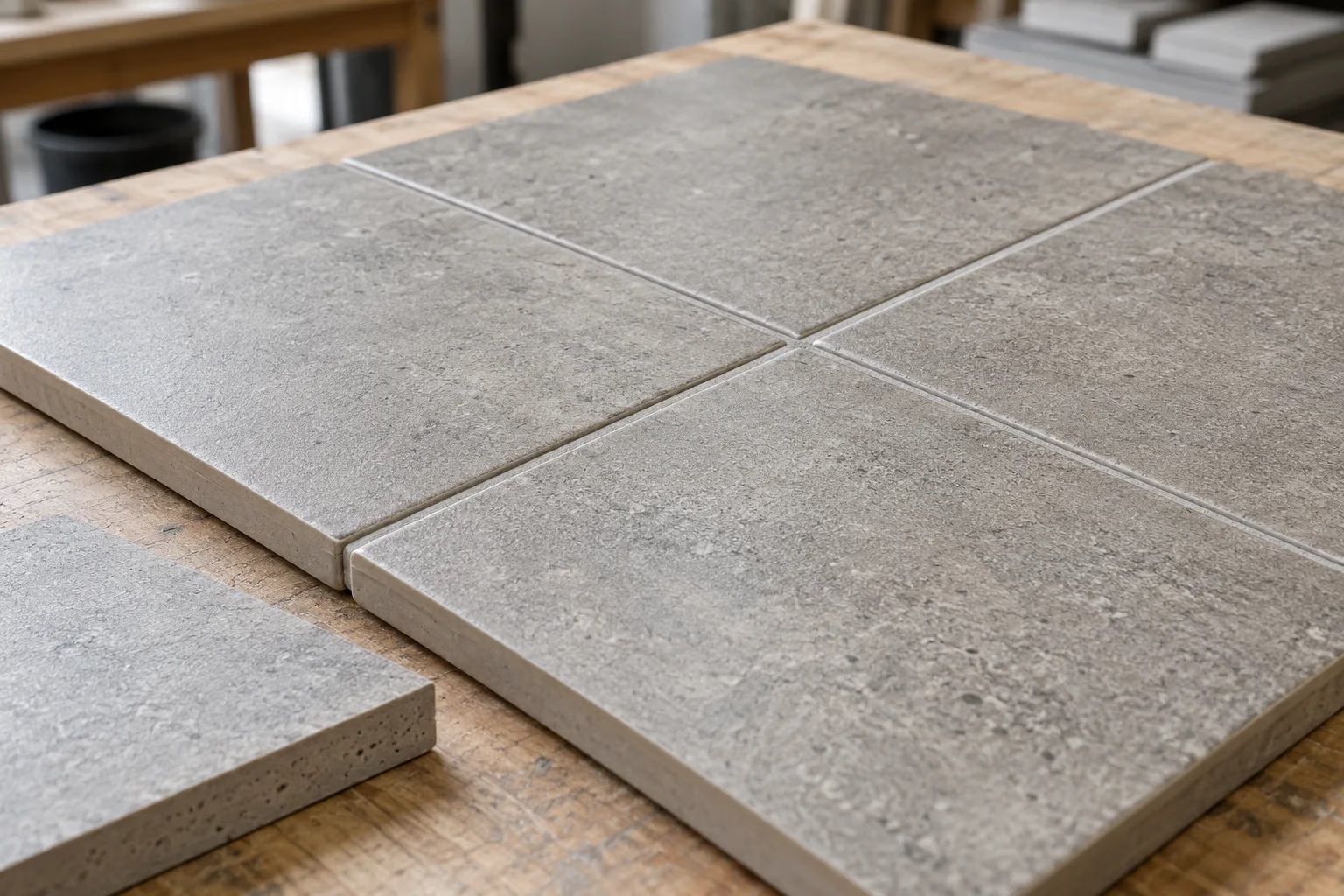
Large porcelain slabs imitating marble or travertine look very convincing, and they’re cheaper, less absorbent and need no sealing. They work on floors, bathroom walls and as island cladding. Keep real stone for a small, visible accent — a windowsill or a bathroom worktop, for example.
2. Vinyl or laminate instead of wooden boards
Wooden boards are beautiful but demanding. Vinyl planks with a good texture look natural and are water-resistant — they work well in the kitchen and hallway. The key is the pattern: the more different boards in a collection, the less you notice repetition.
3. Standard carcasses, custom fronts
In kitchens and wardrobes the fronts are the most expensive part, and they decide the look. Standard carcasses with made-to-measure fronts — in a nice colour, with a routed profile or veneer — give the effect of bespoke joinery for a fraction of the price. You just need to plan the dimensions well to avoid gaps and filler panels.
4. Laminate or compact worktop instead of stone
Good laminate and compact worktops have a realistic stone or wood pattern and stand up to daily use. Sintered stone or quartz is worth considering where the worktop is most visible — on the island — with a cheaper material in a similar colour on the rest of the kitchen.
5. Paint and mouldings instead of costly panelling
A wall painted a deep colour with simple wall mouldings or polyurethane cornices looks refined and costs a fraction of decorative panels. It’s one of the cheapest ways to make a living room or bedroom look designed.
6. Lighting that makes the difference
LED strips in profiles under cabinets, above the worktop and inside built-ins cost little but change how the whole interior feels. It’s worth spending more on one good pendant over the table and building the rest of the lighting on simple, well-placed sources.
Where saving doesn’t pay off
- Wiring, plumbing and waterproofing. Cheaper pipes or skipped waterproofing in the shower mean a risk of leaks and breaking walls years later.
- Hardware: hinges, drawer runners. The cheapest ones break quickly, and replacing them in finished joinery can be a hassle.
- Taps and fittings in the bathroom and kitchen. You use them several times a day, and cheap models leak more often and lose their look faster.
- The mattress and dining chairs. Things you use every day affect comfort more than looks.
- The floor plan. The cheapest material in a bad layout is still in the wrong place.
Example: the same living room on two budgets
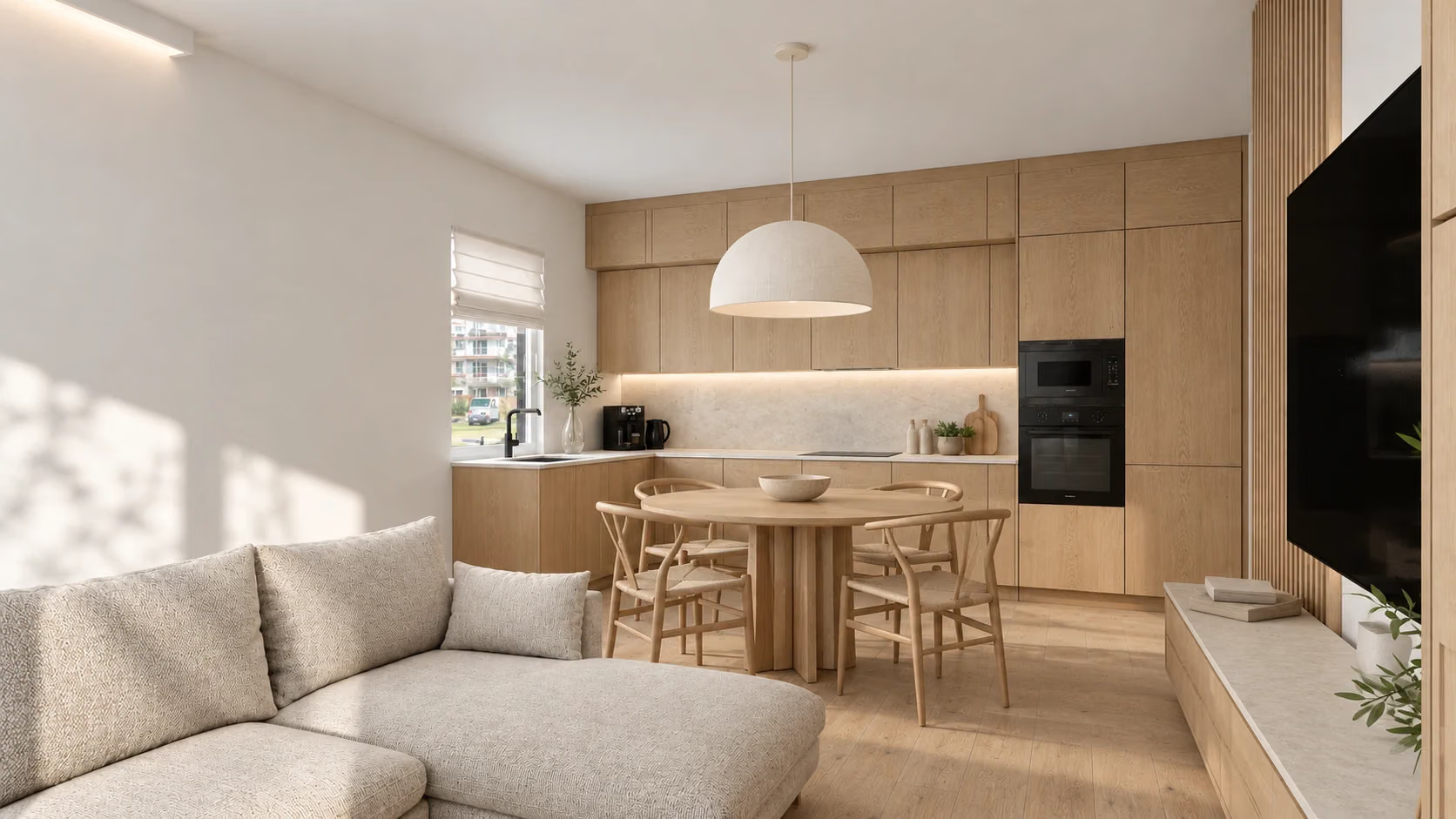
Imagine a living room with a kitchenette where the client dreams of a stone island, an oak floor and floor-to-ceiling bespoke joinery.
The “no compromise” version: oak boards, a sintered stone island and worktop, veneered fronts, designer lights at every point.
The “smart saving” version: vinyl planks with a good oak pattern, sintered stone on the island only and a laminate worktop in a similar tone along the wall, standard carcasses with lacquered made-to-measure fronts, one statement pendant over the table and LED strips in the built-ins.
In a photo both versions look very similar, because the eye goes to the island, the pendant and the cabinet colour — and that’s where the money stayed. The difference is in the places that draw less attention. That’s exactly why it’s worth setting the materials budget together with the design: then you know where spending makes an impact and where an alternative is perfectly fine.
How not to overdo alternatives
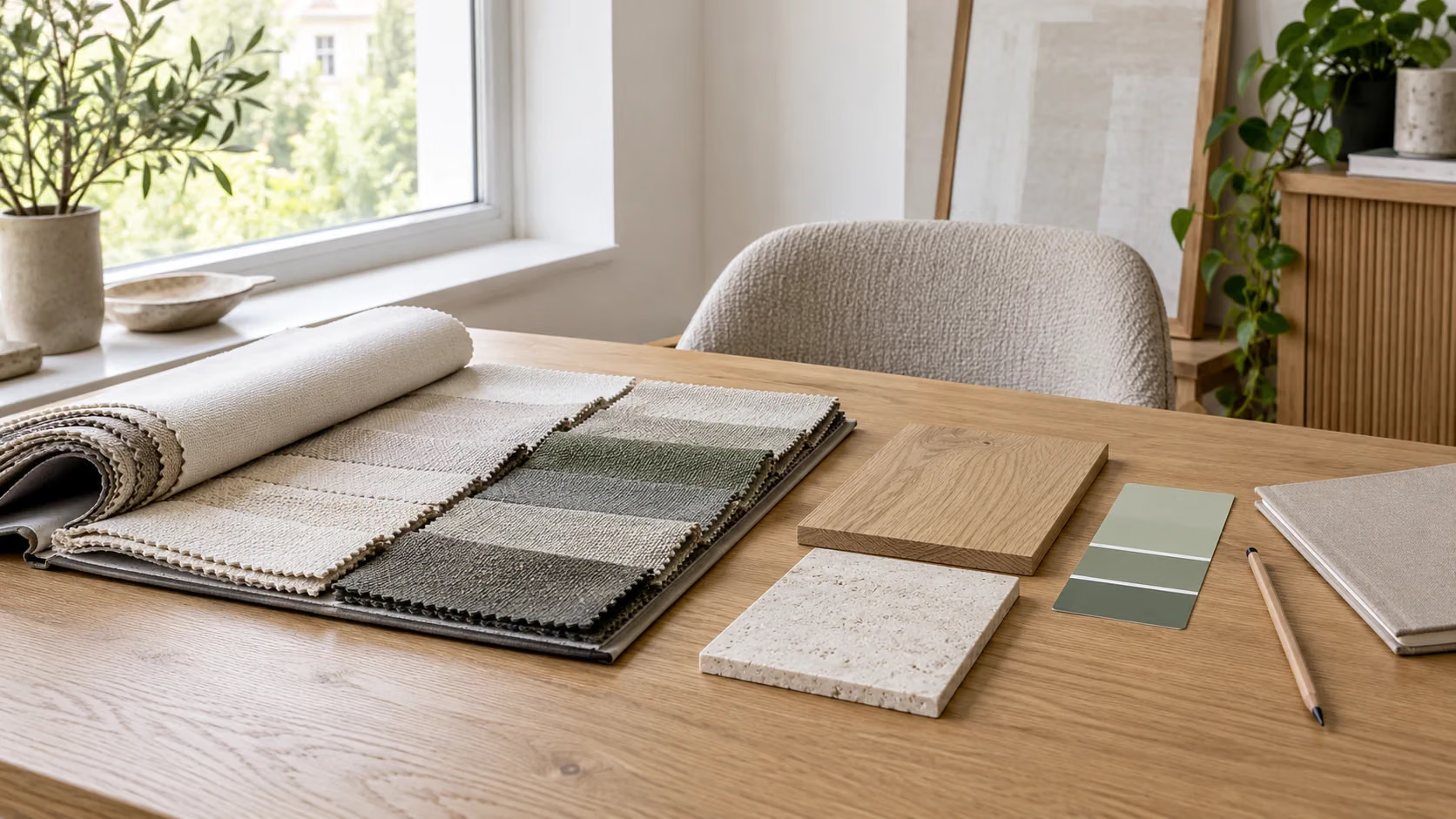
Alternatives work best when they’re consistent. Three different wood imitations in one room look cheap, even if each is good on its own. The rule I use in projects: one refined accent per room, a calm base around it, materials in a similar tone.
The safest way to check is a 3D visualization — you see whether the porcelain next to the fronts and worktop reads as stone or as an imitation, before you order anything.
Summary
A good interior doesn’t have to be the most expensive one. Save on surfaces that are mainly about looks, invest in what’s hidden and used every day, and stick to one consistent palette. And if you want to know what an interior design itself costs on the Łódź market, read How much does interior design cost in Łódź.
Want to match materials to your budget? Book a free 30-minute call — I’ll suggest where to save in your apartment without losing the effect.