
Short answer: the design is always an extra cost, but a renovation without one almost always costs more. The money doesn’t go on the designer — it goes on redoing work, miscounted materials, built-ins that don’t fit and decisions made on site under pressure from the crew. Below I show exactly where.
Where the money goes in a renovation without a design
1. Redoing wiring and plumbing
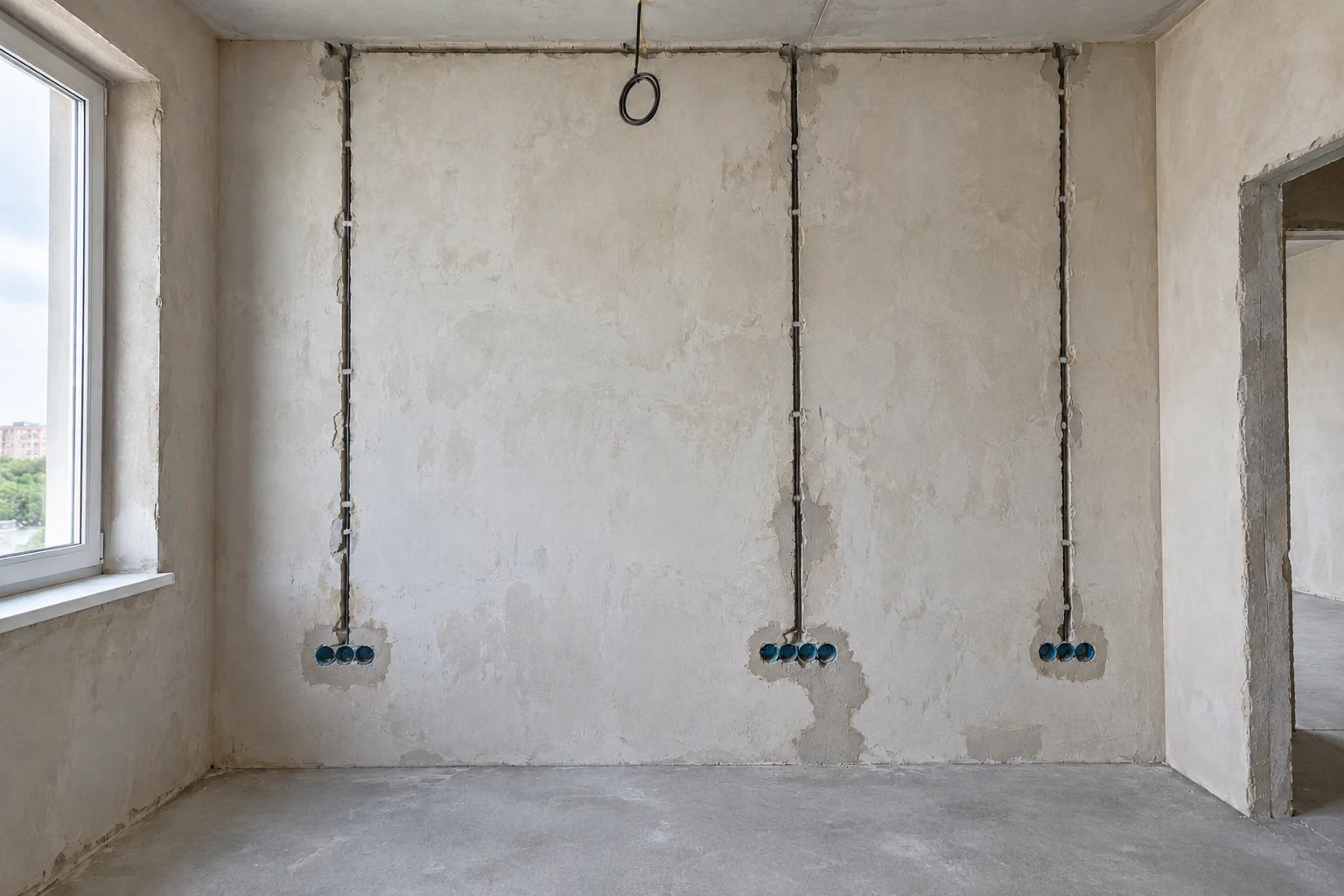
A socket behind a wardrobe, a light switch behind an open door, a drain you can’t connect a kitchen island to. All of it can be fixed — but once the tiles are laid and the walls painted, it means chasing walls, new plaster and a second coat of paint. In a design, sockets and water points follow from the furniture layout, so they end up in the right place the first time.
A typical case: a kitchen planned by eye. The dishwasher ends up far from the drain, the fridge right next to the oven, and there aren’t enough sockets above the worktop. Fixing it means moving the water supply and the wiring — in other words, breaking fresh tiles. On a design drawing these things are obvious before the crew arrives.
2. Materials ordered by eye
Tiles ordered without a layout run out half a box before the end of the wall — and that exact batch is no longer available. Or the opposite: a dozen square metres end up in the basement. The specification in a design gives quantities with a margin calculated for the actual tile layout, not “plus ten percent, just in case”.
3. Built-ins that don’t fit
Kitchen units measured before the screed and plaster, a wardrobe that can’t open because of the skirting board, a fridge that won’t fit in its recess. A joiner builds exactly what’s drawn — and if there’s no drawing, they draw it themselves, their own way.
4. Decisions made on site
“Decide by tomorrow, we need to close up the wall.” Without a design, decisions happen on the run, under pressure from the crew and the schedule. Usually you end up choosing whatever is in stock, not what fits. In a design, the same decisions are made calmly, on a 3D visualization, before anyone picks up a hammer.
5. Contractors quoting blind
Without documentation, each contractor quotes something different — and offers are hard to compare. With drawings and a specification, everyone prices the same scope, and you can see who is expensive and who simply counts more carefully.
What you get for the cost of a design
- A floor plan in 2–3 options — you choose before anything is torn down.
- 3D visualizations — you see the interior with specific materials before you buy them.
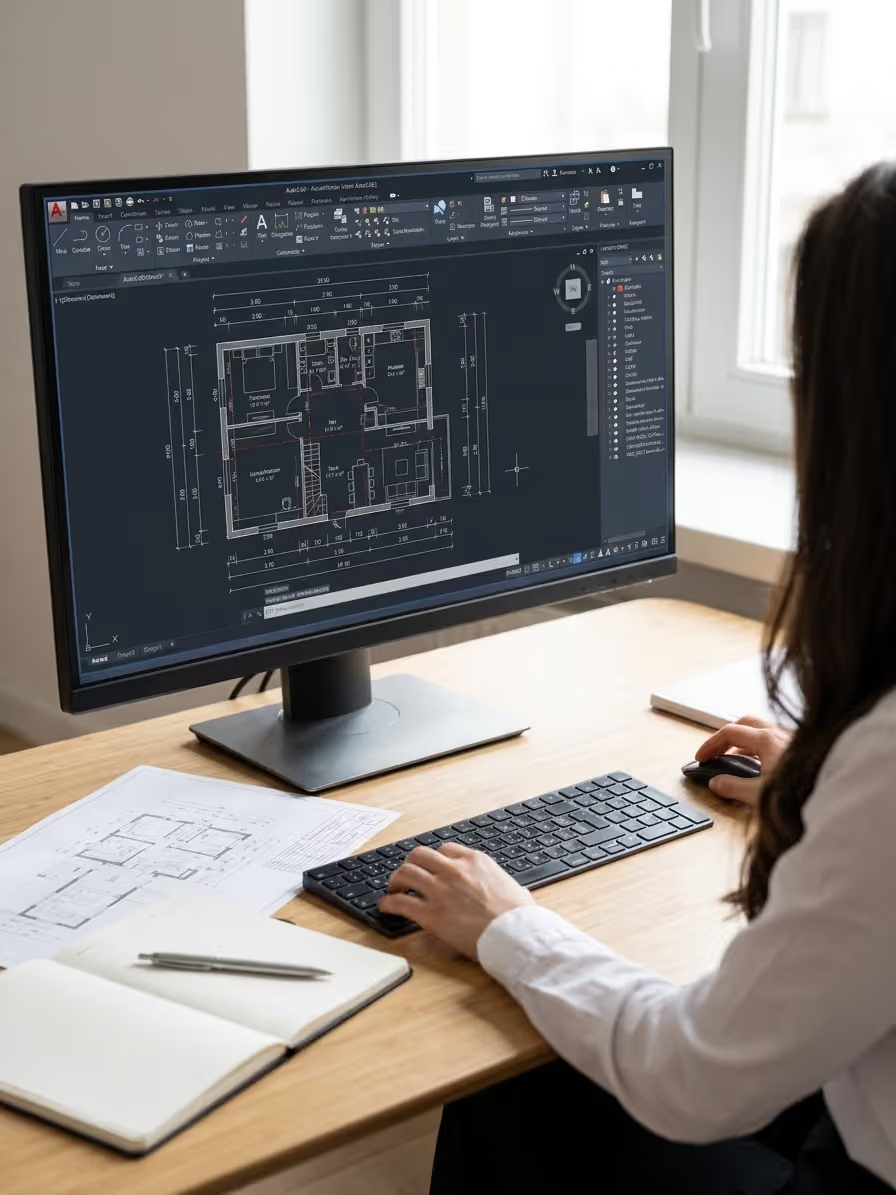
- Technical documentation (in the Standard and Premium packages) — dimensioned drawings, electrical and plumbing layouts, a materials specification and a cost estimate.
- One person keeping an eye on the whole — from the first drawing to the conversation with the crew.
You pay in stages: 50% after the concept is approved, 30% after the visualizations and 20% when the design is handed over — always for the part you’ve already seen.
The most expensive renovation is the one where something has to be done twice.
Angelina Stefańska
When you can manage without a designer
To be fair: not every renovation needs a design.
- A refresh — painting, new doors, replacing the floor in the same layout.
- One room with no wiring or plumbing changes — for example a bedroom where you don’t move sockets or walls.
- A trusted crew and a clear plan — you know exactly what you want and have someone who has done it many times.
A design makes the most sense for a new-build apartment handed over in developer standard, a full renovation, and anywhere you’re touching the kitchen or bathroom — where plumbing, wiring and custom built-ins raise the cost of every mistake.
How to work it out for your apartment
- Check the market price ranges for a design in Łódź — I describe them in How much does interior design cost in Łódź.
- Work out your renovation budget and estimate what one serious redo might cost (kitchen, bathroom, wiring and plumbing).
- Compare. If the design helps you avoid even one such redo, it has usually paid for itself.
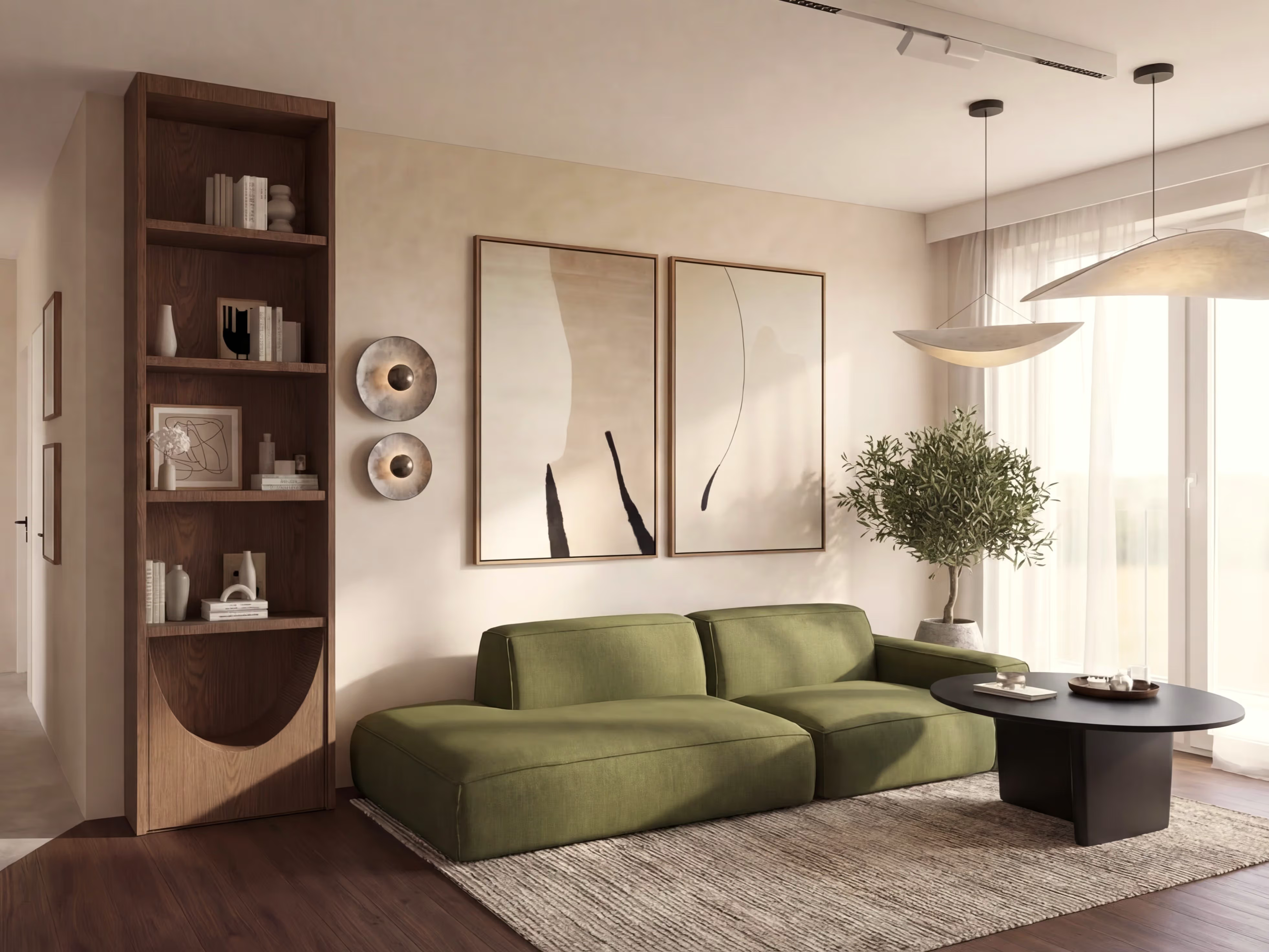
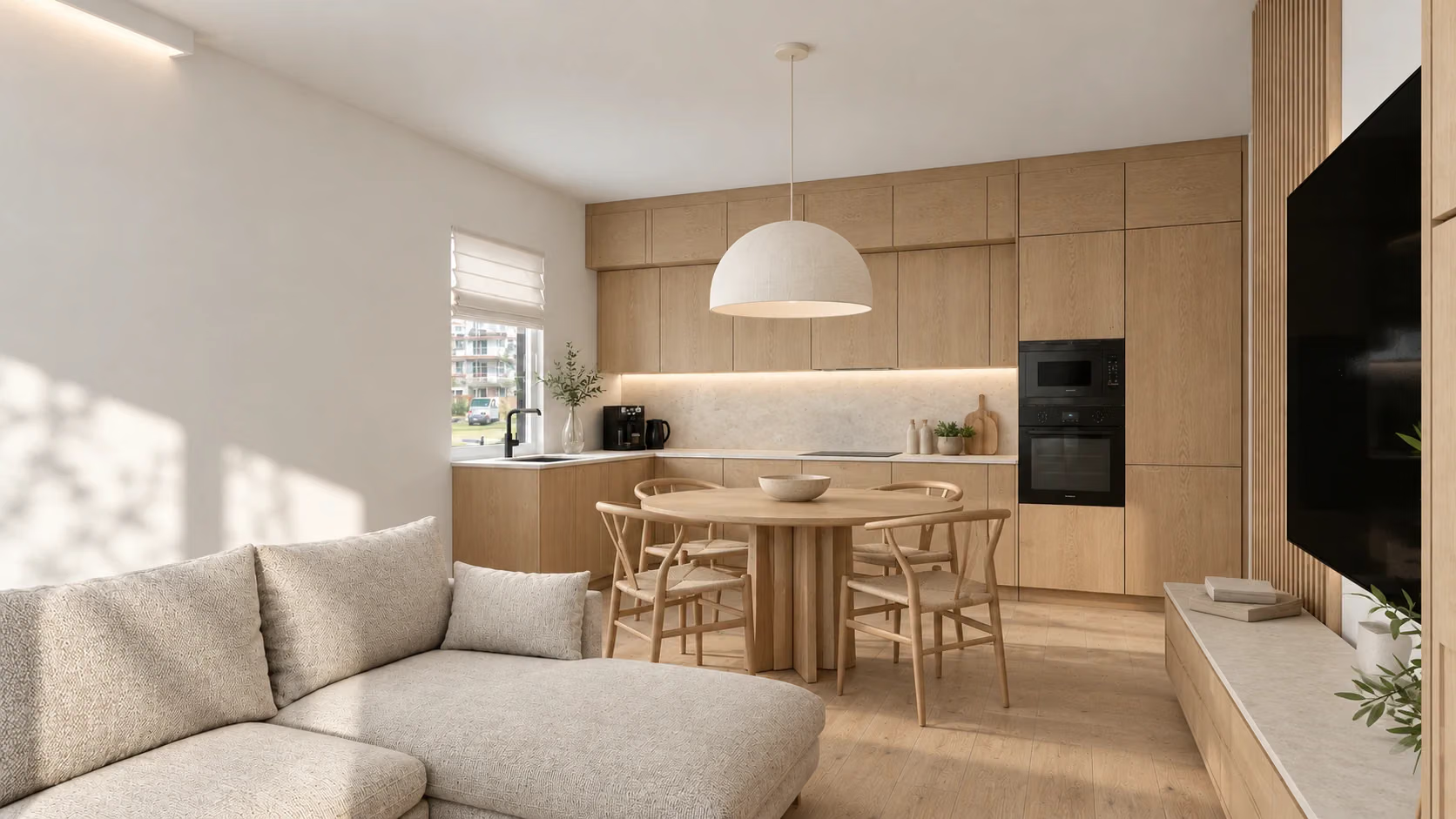
A 3D visualization shows the interior with specific tiles, flooring and furniture before you buy anything. Changing the cabinet colour or the tile format at this stage takes a few minutes of work, not a new order.
Summary
An interior design isn’t a cost “instead of” the renovation — it’s a way to make the renovation cost what it was supposed to cost. If you’re facing a new-build apartment or a full renovation, start with the floor plan — that’s where the most expensive decisions are made.
Want to know what a design would cost in your case? Book a free 30-minute call — once I’ve seen your floor plan, I’ll give you a specific figure, with no obligation.